Peanut Processing Machinery WhatsApp: 8613954503673 E-mail: sales@xtpeanutmachine.com sales001@xtpeanutmachine.com
Peanut Processing Machinery WhatsApp: 8613954503673 E-mail: sales@xtpeanutmachine.com sales001@xtpeanutmachine.com
Sep. 11, 2026
For enterprises planning to start or expand peanut butter processing operations, selecting a suitable peanut butter production line is a critical decision.
A wide range of peanut butter processing equipment is available on the market. However, the most expensive or largest-scale production line is not necessarily the right fit for every factory.
An ideal production line should be customized according to the customer’s actual production capacity, peanut butter varieties, automation requirements, workshop space, and future development plans.
A properly configured peanut butter processing line helps manufacturers boost production efficiency, cut unnecessary investment costs, and maintain consistent product quality.
This article will outline the key factors to consider when choosing a peanut butter production line.
Production capacity is the primary factor to consider when selecting a peanut butter production line.Before purchasing equipment, you need to define your planned peanut butter output per hour or per day.
For example, small food processors may only need a compact production system, while large food manufacturers may require a continuous processing line. The capacity of the entire production line should be well-balanced.
If the capacity of the roasting section far exceeds that of the grinding section, the colloid mill will become a production bottleneck. Similarly, if the throughput of the filling machine cannot match the output of the upstream processing equipment, the finished peanut butter will need to be temporarily stored in holding tanks waiting for filling.
Therefore, the capacity of the following equipment needs to be evaluated comprehensively:
Peanut cleaning equipment
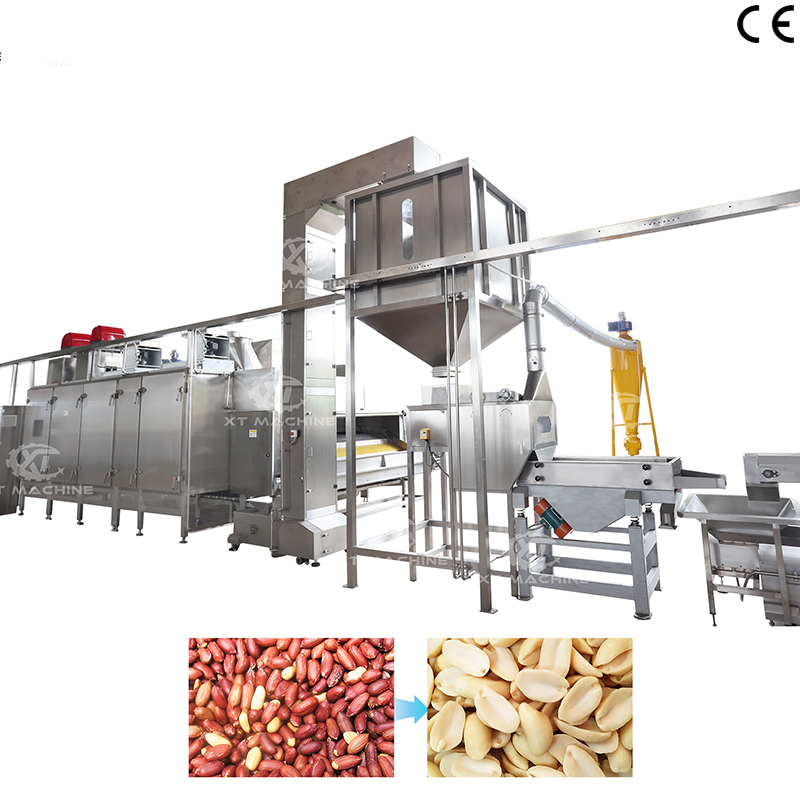
Peanut roasting and cooling equipment
Peanut skinning and germ separation equipment
Sorting equipment
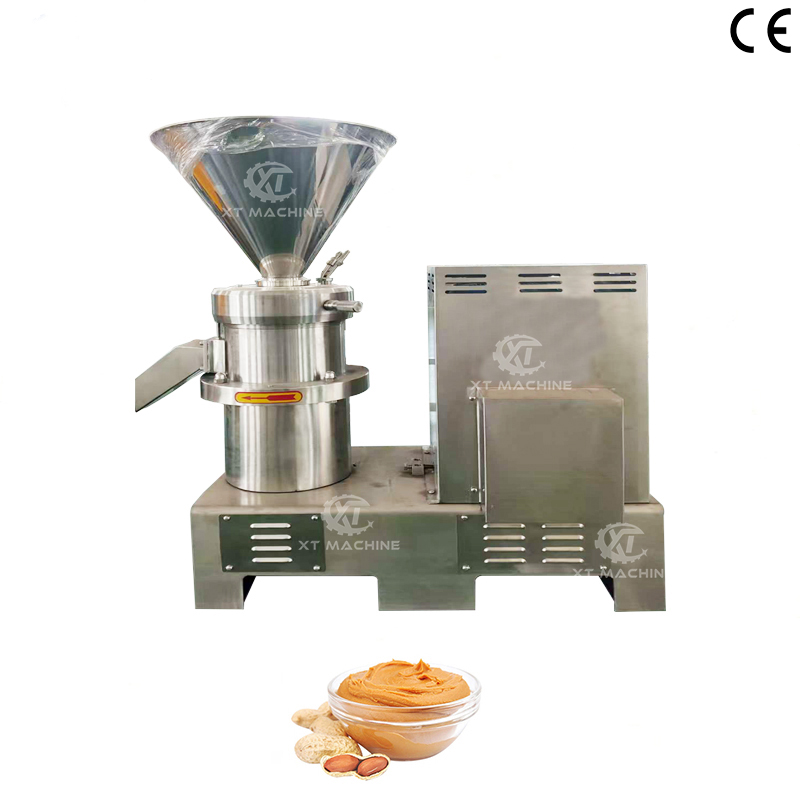
Peanut grinding equipment
Blending equipment
Agitation equipment
Cooling equipment
Degassing equipment
Holding tanks
Filling machines
Professional machinery manufacturers are able to propose well-matched equipment configurations based on clients' targeted production capacity.
2. Select the Right Type of Peanut Butter
The type of peanut butter you intend to produce will also affect your equipment configuration. Different product varieties may require distinct grinding and mixing processes.
Smooth peanut butter features a fine and uniform texture. For this product, the grinding system is especially critical. The peanut butter grinder must deliver stable grinding performance and allow operators to adjust processing parameters to achieve the desired fineness.
Crunchy peanut butter contains visible peanut pieces. The production process needs to be designed accordingly to retain some peanut particles, or add peanut chunks in the later processing stage. Therefore, the production setup for crunchy peanut butter may differ from that for fully smooth peanut butter.
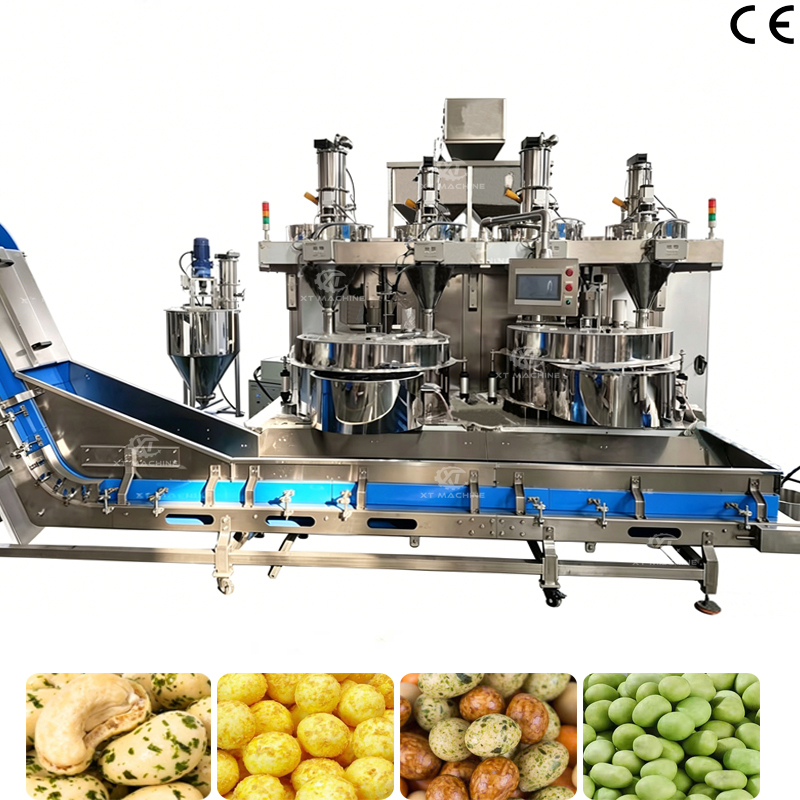
Some manufacturers produce peanut butter with added sugar, salt, vegetable oil or other food ingredients. In such cases, a blending system can be integrated into the production line to ensure all ingredients are fully and evenly mixed.
If you plan to manufacture multiple types of peanut butter, it is recommended to communicate your specific requirements with machinery manufacturers before purchasing equipment.
The degree of automation is another key factor to consider when selecting a peanut butter production line.
Peanut butter production lines can be designed as semi-automatic systems or highly automated systems according to customers’ production requirements and budgets.
A semi-automatic system requires operators to complete part of the material handling, feeding or production control work. This type of system is suitable for small-scale manufacturers or enterprises that are new to peanut butter production.
Its advantages include:
Lower initial investment
Flexible operation
Relatively simple production management
Ideal for small production volumes
For medium and large food manufacturers, a fully automatic peanut butter production line connects multiple processing stages via conveyors, elevators and automatic control systems. It reduces manual labor and improves production continuity.
The level of automation should be determined based on the required production capacity and labor conditions, rather than simply opting for the highest automation configuration.
The roasting process exerts a significant impact on the flavor and aroma of peanut butter. When selecting peanut roasters, manufacturers should take the following factors into account:
Production capacity
Peanut variety
Roasting method
Temperature control
Processing time
Energy consumption
Workshop space
The capacity of roasting equipment must match that of the subsequent skinning and grinding machines. For large-scale production lines, continuous roasting equipment can be considered. For small manufacturers, batch roasting systems may offer greater flexibility. The final choice should be determined by the customer’s actual production requirements.
Peanut skinning is another critical stage in peanut butter production.
Peanut skinning machines remove the red skin from peanut kernels before they enter the grinding process.A well-suited skinning system should deliver consistent skin removal performance and also separate the germ, as the germ contains the highest concentration of aflatoxin.The capacity of the skinning equipment should also match the roasting and grinding sections to maintain balance across the whole production flow.
The peanut butter grinder is one of the most critical pieces of equipment in the entire production line. Grinding equipment directly affects the texture and fineness of the final product. The following factors should be considered when choosing a grinder:
The grinder should be able to meet your required production output.
Different customers have varying requirements for peanut butter texture, and the equipment must achieve the fineness needed for your target product.
For industrial production, reliable continuous operation is essential to maintain consistent output.
Food processing equipment should allow easy cleaning and routine maintenance.
Enterprises that plan to produce other nut butters as well may consider a multi-functional grinding system. Depending on the equipment configuration, the same processing system can also produce the following products:
Cashew butter
Almond butter
Hazelnut butter
Pistachio butter
Sesame paste
Mixed nut butter
Workshop space is often overlooked when purchasing processing equipment. The peanut butter production line should be reasonably arranged according to workshop dimensions and material flow direction.
The typical material flow sequence is: Raw peanuts → Cleaning → Roasting → Peeling → Sorting → Grinding → Mixing → Storage → Filling → Packaging
The production line layout shall minimize unnecessary material transportation and reserve sufficient space for equipment operation, maintenance and cleaning.
Before equipment fabrication, it is recommended to provide machinery manufacturers with the following information:
Workshop length and width
Workshop height
Existing processing equipment
Raw material entry point
Finished product exit point
Available utilities such as water, electricity and compressed air
Equipment manufacturers can customize the equipment layout to fit your workshop space based on this information.
When investing in a peanut butter processing plant, it is beneficial to consider future capacity growth in advance.
For example, a company may only need a small production line at present but expects rising market demand in the future. In such cases, future expansion needs can be taken into account during production line design.
Key points to consider:
Reserved space for additional equipment
Scalable conveying systems
Properly designed storage capacity
Planning for future filling and packaging equipment
Selection of equipment capable of supporting higher output
A well-planned production line makes future capacity expansion easier and reduces the need for a complete rebuild of the processing system.
When purchasing peanut butter processing machinery, comparing only the price of individual machines can be misleading. Lower-priced equipment does not necessarily deliver the most suitable overall solution. Customers should also evaluate the following factors:
Production capacity
Equipment configuration
Processing efficiency
Degree of automation
Energy consumption
Equipment materials
Installation requirements
Technical support
Spare parts supply
After-sales service
Future expandability
The overall value of the production line should be assessed based on its ability to meet long-term production requirements.
If you are searching for a peanut butter production line or need assistance selecting suitable peanut butter processing equipment, please feel free to contact us.
Company: Yantai XT Machinery Manufacturing Co., Ltd.
Website: xtpeanutmachine.com
Email: sales002@xtpeanutmachine.com
WhatsApp: +86 13780905717
Please provide your target production capacity, peanut butter type, workshop dimensions and automation requirements. Our team can recommend suitable equipment configurations and customized peanut butter processing solutions.
Navigation
WhatsApp: 8613954503673
Tel: +86 13954503673
E-mail: sales@xtpeanutmachine.com
Add: No.8, Jinshajiang Road, Yantai ETDZ, China
E-mail: sales001@xtpeanutmachine.com
Follow Us